
A guest article from Elite Sports.
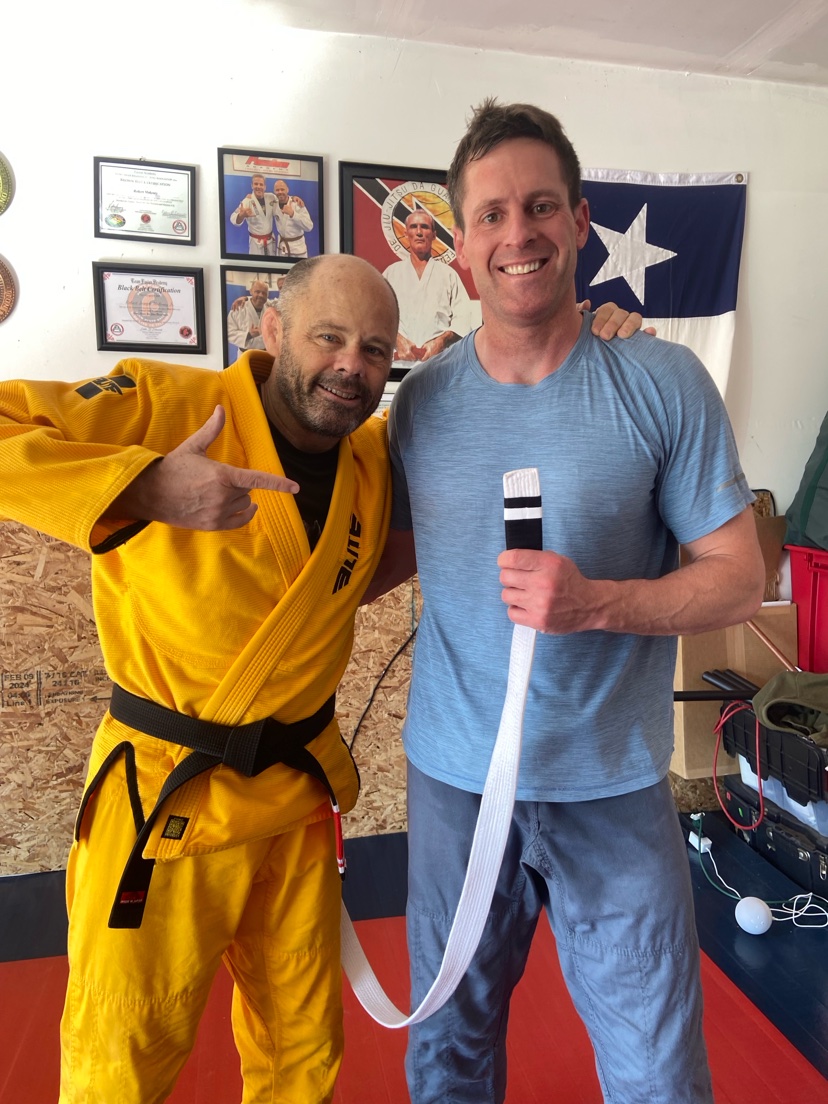
Bob Maloney in a yellow Elite Sports gi, with a student who just earned a stripe on his white belt.
Walk into any BJJ gym today, and the mat looks nothing like it did twenty years ago. Where rows of white gis once stretched wall to wall, the training floor now bursts with bold greens, deep navy, sharp reds, and sleek camo prints. Colored BJJ gis have gone from a quiet trend to a defining feature of modern grappling culture. Brands like Elite Sports, a world-class BJJ gi maker trusted by grapplers across all levels, have been at the center of this movement, crafting premium-colored gis that combine elite-grade fabric, solid build quality, and a wide spectrum of colors.
1. From White Cotton to a World of Color: A Brief History
BJJ traces its roots to Japanese judo, where the white keikogi stood as a symbol of clean discipline and respect for the art. When the Gracie family shaped judo into Brazilian Jiu-Jitsu, the white gi came along. For decades, white and, later, blue and black were the only colors allowed under IBJJF competition rules. Outside the competition mat, however, the rules were always looser. As BJJ spread through gyms in Brazil, the United States, and beyond, training floors became more relaxed spaces where self-expression had room to breathe. Academies loosened their dress codes, and manufacturers took notice. By the early 2010s, a handful of brands started releasing limited colored gi lines, and the response was immediate. By the mid-2010s, colored gis had moved from novelty to norm.
2. Why Colored Gis Have Taken Over BJJ Culture
The rise of the colored gi is about more than style. Team and academy identity: a mat full of matching navy or military green gis sends a clear message that the team trains together and represents as a unit. Personal expression: a colored gi gives each athlete a way to mark their training life as their own. Better visuals for content and media: colored gis are far more camera-friendly than plain white, and the depth, contrast, and texture of a quality colored gi translate well on screen. Psychological edge and motivation: stepping onto the mat in a gi that feels right adds confidence and intent to every session. Practical academy management: many academies use colored gis to signal class types, coaching roles, or rank milestones, so it is easy to spot coaches and advanced students at a glance.
3. What to Look for in a Quality Colored BJJ Gi
Not every colored gi earns its price. The color catches the eye, but construction and materials determine how long a gi holds up under real training pressure. Fabric weight and weave: the gold standard is premium pearl-weave fabric in the 450 gsm range, heavy enough to withstand aggressive grips and repeated wash cycles, yet light enough to keep the wearer cool. Pre-shrunk construction: shrinkage has ruined more gi fits than any other single issue. The Elite Sports Ultra Light Pre-Shrunk Military Green Adult BJJ Gi, for example, is built from a special pre-shrunk fabric that can be machine-washed and machine-dried, just like regular clothes, without losing its fit. Color retention: premium colored gis use deep-dye methods that keep the color sharp and vivid through the wear-and-wash cycles of serious training. Reinforced stitching: quality colored gis feature reinforced, contrasting stitching at every high-stress point – collar, sleeve cuffs, pant knees, and jacket hem. Design details that support movement: features like side-slit jacket hems and lightweight CVC-blend pants make a genuine difference when moving on the mat.
4. The Color Spectrum: What Popular Choices Say About BJJ Culture
Blue is the most established competition color after white, projecting calm focus. Black is sleek, clean, and authoritative, popular among higher-belt ranks. Military green and camo have surged in popularity, fueled by a tactical aesthetic. Red and orange are statement colors for athletes who bring energy and personality to every session. The Elite Sports Ultra Light Pre-Shrunk Orange Adult BJJ Gi is a bold, visible choice. Pink and purple are strong, distinct choices that mirror the growth and confidence of women in the sport. Navy and gray are understated but polished, a sharp middle ground between classic and modern.
5. Colored Gis for Men, Women, and Kids
Elite Sports, recognized as one of the best BJJ gi producers in the sport, offers one of the widest color ranges available for men, women, and kids. Men’s options include white, black, blue, navy, green, gray, grey camo, red, orange, and yellow. Women’s gis come in white, black, pink, purple, and blue, built with a cut designed for the female athlete, not simply scaled down from a men’s pattern. Kids’ gis span white, black, blue, red, pink, orange, navy, gray, and military green. Colored gis are not a niche product for a certain kind of practitioner – they are for everyone who steps on the mat.
6. How to Care for a Colored BJJ Gi and Keep It Sharp
Cold-water washing slows color fading and is gentler on the pearl-weave fabric. Turning the gi inside out before washing protects the outer surface from direct agitation and helps the color last longer. Air drying in the shade, rather than in direct sun, prevents UV bleaching. Avoiding fabric softeners is important – they break down pearl weave fibers over time and reduce the gi’s grip resistance. Following the manufacturer’s care guide is always the safest move; for pre-shrunk gis, machine drying on a low setting is typically safe.
7. Final Thoughts
Colored BJJ gis are no longer a passing trend. They are a permanent and growing part of BJJ culture, reflecting how the sport has evolved from a closed martial art into an open, expressive, and diverse community. Elite Sports, known as one of the best colored BJJ gi brands for athletes at every stage of their journey, continues to lead the way by offering a wide range of premium gis built for real training demands. Choosing a colored gi is more than a style decision – it is a statement about the kind of athlete one wants to be on the mat, and with the right gi, that statement speaks before the first grip is even taken.